

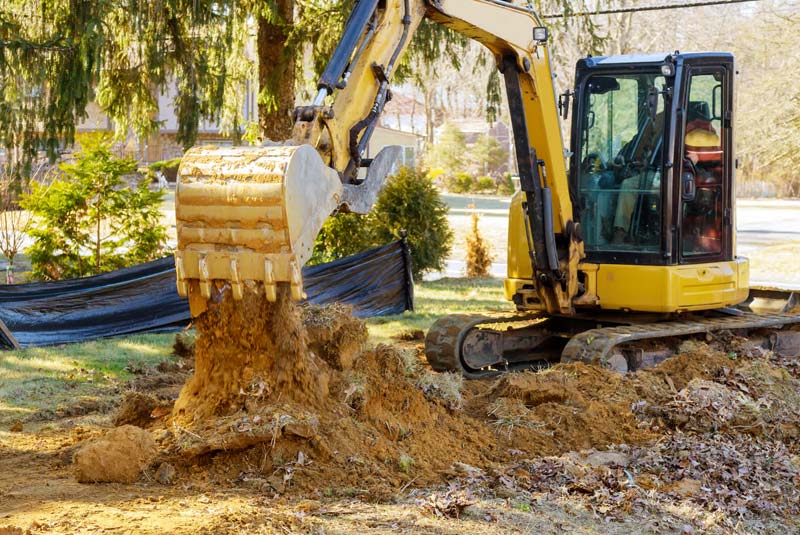
As global infrastructure development, urban renovation, and agricultural mechanization continue to accelerate, small excavators are becoming one of the most in-demand categories in the construction equipment industry. Known for their compact size, flexible maneuverability, and multifunctional performance, mini excavators are now widely used across construction, landscaping, farming, municipal engineering, and utility installation projects.
Compared with large excavators, small excavators offer significant advantages in confined and complex working environments. Their compact structure allows operators to work efficiently in narrow streets, residential communities, indoor demolition sites, orchards, greenhouses, and small construction projects where larger machines cannot easily access.
Industry experts note that increasing labor costs and rising demand for operational efficiency are key factors driving the rapid growth of the mini excavator market worldwide.
Growing Demand Across Multiple Industries
In recent years, the application range of small excavators has expanded far beyond traditional construction work. Today, these machines are commonly used in:
- Urban infrastructure and road repair projects
- Pipeline and cable trenching operations
- Farm irrigation and agricultural land preparation
- Orchard and greenhouse construction
- Landscaping and garden engineering
- Residential foundation excavation
- Indoor demolition and renovation work
- Municipal maintenance and utility installation
Their versatility makes them especially attractive for contractors, rental companies, and small business owners seeking efficient equipment with lower operating costs.
Compact Design Improves Flexibility and Transportation
One of the biggest advantages of mini excavators is their excellent mobility. Most compact models can be transported using light trailers or small trucks, reducing logistics costs and improving job-site flexibility.
Zero-tail swing and compact-tail designs are also becoming increasingly popular, allowing machines to rotate and operate safely in tight environments without damaging surrounding structures. This feature is particularly important for urban construction projects and residential work areas.
Manufacturers are continuously optimizing machine structure to improve balance, digging force, and operational stability while maintaining compact dimensions.
Hydraulic Technology Enhances Working Efficiency
Modern small excavators are equipped with upgraded hydraulic systems that provide smoother operation, faster response, and improved fuel efficiency. Advanced hydraulic control technology allows operators to perform multiple movements simultaneously, improving overall productivity on the job site.
In addition, quick-change attachment systems enable operators to switch between different tools within minutes. Common attachments include:
- Digging buckets
- Hydraulic breakers
- Augers
- Grapples
- Rippers
- Tilt buckets
- Wood grabs
- Soil leveling tools
This multifunctional capability allows one compact excavator to perform excavation, demolition, drilling, loading, grading, and material handling tasks efficiently.
Operator Comfort and Safety Become Key Priorities
As market competition increases, equipment manufacturers are placing greater emphasis on operator experience and safety performance.
Many new-generation mini excavators now feature:
- Ergonomic operator cabins
- Adjustable suspension seats
- LCD display control panels
- Air conditioning systems
- Pilot joystick controls
- Rear-view cameras
- LED working lights
- Noise and vibration reduction technology
These improvements help reduce operator fatigue during long working hours while improving operational precision and safety.
Rental Market Continues to Grow
The global equipment rental industry is also contributing to the growing popularity of small excavators. Due to their relatively low purchase cost, simple operation, and broad application range, mini excavators have become one of the most frequently rented machines in many markets.
Rental companies increasingly prefer compact excavators because they are easy to transport, maintain, and operate, making them ideal for short-term construction and landscaping projects.
Industry analysts predict that demand from rental businesses will remain an important growth driver for the compact construction equipment sector.
Electric and Smart Excavators Gain Attention
With increasing environmental regulations and growing interest in sustainable construction equipment, electric mini excavators are gradually entering the market.
Electric compact excavators offer several advantages, including:
- Zero on-site emissions
- Lower operating noise
- Reduced maintenance requirements
- Improved suitability for indoor operations
These machines are particularly suitable for urban projects, indoor demolition, and environmentally sensitive areas.
At the same time, intelligent technologies such as GPS positioning, remote diagnostics, telematics systems, and automated maintenance monitoring are becoming more common in high-end excavator models, helping fleet managers improve machine utilization and maintenance efficiency.
Future Market Outlook
According to industry forecasts, the global small excavator market is expected to maintain stable growth over the coming years, driven by urbanization, infrastructure investment, agricultural modernization, and increasing demand for compact multifunctional machinery.
Manufacturers are expected to continue focusing on:
- Fuel efficiency improvements
- Smart control technologies
- Multifunctional attachment systems
- Electric and hybrid power solutions
- Enhanced safety and comfort features
As construction and agricultural industries increasingly prioritize flexibility, efficiency, and lower operating costs, small excavators are expected to remain one of the most important and fastest-growing equipment categories in the global machinery market.