


Welcome to the Wanli Machinery Blog!
We share industry insights, equipment guides, and practical tips on construction machinery, engineering equipment, pneumatic tools, and landscaping machinery to help you make better equipment decisions.
👉 Follow Wanli Machinery on Facebook for the latest product updates, project cases, industry news, and expert knowledge. Stay connected with our global community and never miss new content.
Thank you for reading and welcome to explore more articles from Wanli Machinery!
Table of Contents
Key Takeaways
- Understand real factors that determine productivity on construction sites
- Learn how hydraulics, engine system, and structure affect cycle time
- Compare efficiency differences between mini and larger excavators
- Explore real engineering data and industry benchmarks
- Identify optimization strategies used in modern construction projects
- Avoid common mistakes that reduce output and increase fuel cost
- Use practical case studies and efficiency models for decision-making
Introduction
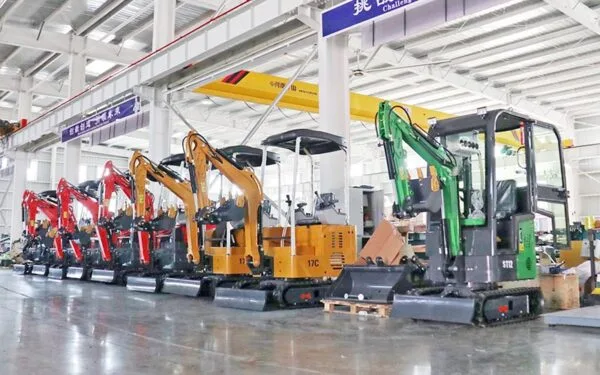
In modern construction, efficiency is no longer just a performance indicator—it directly determines profitability. As urban construction projects become more compact, labor costs continue to rise, and project timelines shorten, contractors are increasingly relying on compact equipment to maintain competitive advantage.
According to global construction equipment market reports published by major industry analysts such as Technavio and Allied Market Research, compact excavators are expected to remain one of the fastest-growing machinery segments due to their high adaptability in urban infrastructure, landscaping, and utility installation projects. The primary reason behind this growth is simple: better mini excavator work efficiency in restricted job environments.
A well-optimized mini excavator can reduce excavation time by up to 30–50% compared to manual labor while consuming significantly less fuel than mid-size machines in similar small-scale tasks. This makes efficiency not just a technical concept but a direct cost-saving factor for contractors.
What Is Mini Excavator Work Efficiency?
Mini excavator work efficiency refers to the measurable productivity output achieved per unit of time, energy, and operator input. It combines mechanical performance, hydraulic responsiveness, operational design, and job-site conditions.
Core Efficiency Dimensions
Mechanical Efficiency
This measures how effectively engine power is converted into usable digging force. Losses in transmission or hydraulics reduce overall output.
Operational Efficiency
This reflects how quickly and smoothly an operator can complete repeated tasks such as digging, swinging, and dumping.
Energy Efficiency
Energy efficiency evaluates fuel consumption relative to completed workload.
Time Efficiency
Time efficiency focuses on cycle time reduction, including digging, lifting, swinging, and dumping operations.
Engineering Foundations of Mini Excavator Work Efficiency
Hydraulic System Architecture
Hydraulics are the core of excavation performance. A modern mini excavator typically uses a variable displacement pump system to optimize flow rate according to load demand.
Key Hydraulic Components
- Main hydraulic pump
- Control valves
- Hydraulic cylinders
- Flow distribution system
- Sealing system (e.g., NOK seals in industrial models)
Why Hydraulic Response Time Matters
A delay of just 0.2–0.5 seconds in hydraulic response can reduce cycle efficiency by up to 8–12% in repetitive operations.
Engine Performance and Load Matching
Engine output directly determines hydraulic pressure stability and operational speed.
Industry Standard Benchmarks
- 1-ton class mini excavators typically operate between 8–15 HP
- Fuel consumption averages 0.8–1.5 liters per hour depending on load
- Optimal engine load efficiency range: 70–85%
Underload vs Overload Scenarios
| Condition | Effect on Efficiency |
|---|---|
| Underload | Slow hydraulic response, wasted fuel |
| Optimal Load | Maximum productivity and fuel balance |
| Overload | Increased wear, reduced cycle time efficiency |
Mini Excavator Work Efficiency in Real Construction Scenarios
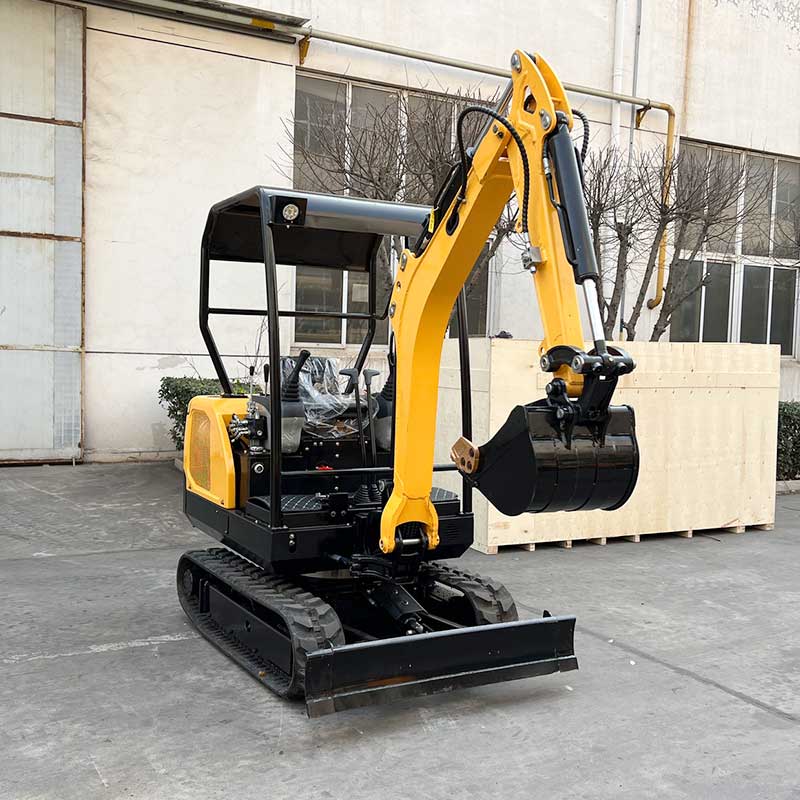
Urban Utility Installation
Mini excavators are widely used in underground cable and pipeline installation.
Efficiency Data Example
- Manual trenching: 8–10 meters/day
- Mini excavator trenching: 50–120 meters/day
- Efficiency gain: up to 12x
Landscaping and Gardening Projects
Compact excavators are essential for precision landscaping.
Typical Tasks
- Tree pit digging
- Garden leveling
- Pond excavation
- Irrigation channeling
Efficiency Gain
Compared to manual labor, time reduction can reach 60–80%.
Residential Construction
In confined residential areas, mini excavators outperform larger machines due to maneuverability.
Mini Excavator Work Efficiency Comparison Table
| Performance Factor | Mini Excavator | Mid-Size Excavator | Manual Labor |
| Digging Speed | High in tight spaces | High overall | Low |
| Fuel Efficiency | Excellent | Medium | N/A |
| Mobility | Excellent | Medium | High |
| Precision Work | Very High | Medium | High |
| Large Earthmoving | Low | High | None |
| Operating Cost | Low | Medium-High | High labor cost |
Advanced Concepts of Mini Excavator Efficiency
Cycle Time Optimization
Cycle time includes four stages:
- Digging
- Lifting
- Swinging
- Dumping
Optimization Principle
Reducing swing radius and improving hydraulic flow can shorten cycle time by 15–25%.
Load Distribution Efficiency
Proper load balancing reduces stress on boom and hydraulic arms.
Engineering Insight
Uneven load distribution increases structural fatigue by up to 18% over long-term operation.
Ground Interaction Efficiency
Soil type significantly affects performance:
| Soil Type | Efficiency Impact |
| Loose sand | High efficiency |
| Clay soil | Medium efficiency |
| Rocky ground | Low efficiency |
| Frozen soil | Very low efficiency |
Efficiency Optimization Strategies
Operator Skill Enhancement
Precision Control Technique
Experienced operators reduce unnecessary joystick movements, improving cycle consistency.
Productivity Impact
Skill improvement alone can increase efficiency by 10–20%.
Job Site Layout Optimization
Smart Material Placement
Keep dump trucks within a 120–180° swing range for maximum efficiency.
Workflow Zoning
Divide job site into:
- Dig zone
- Swing zone
- Dump zone
Attachment-Based Efficiency Enhancement
Hydraulic Breaker
Used for demolition work; increases efficiency by up to 5x compared to manual breaking.
Auger Drill
Reduces drilling time by 60–70%.
Grapple
Improves material handling efficiency in logging and recycling operations.
Case Study: Municipal Pipeline Project
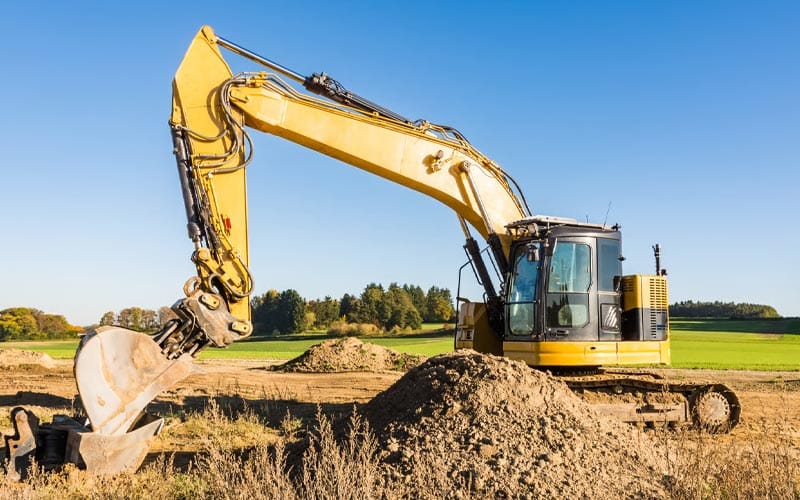
A 2023 infrastructure maintenance project in Southeast Asia utilized 1-ton mini excavators for urban pipeline replacement.
Results
- Project length: 3.2 km
- Completion time reduction: 38%
- Fuel savings: 22%
- Labor cost reduction: 45%
Key Success Factor
Efficient trenching and reduced machine repositioning time.
Mini Excavator Efficiency vs Industry Standards
According to construction equipment productivity benchmarks:
- ISO 6165 classification defines compact excavators as machines under 6 tons
- Average cycle time target: 8–15 seconds per cycle
- High-efficiency machines achieve under 10 seconds in optimal conditions
Common Efficiency Loss Factors
Poor Maintenance Practices
Regular maintenance is one of the most important factors affecting long-term efficiency. When maintenance is neglected, even small issues can quickly escalate into performance loss.
Hydraulic Leakage
Hydraulic oil leakage reduces system pressure, leading to weaker digging force and slower cycle speed. Over time, this also increases fuel consumption because the system compensates for lost pressure.
Filter Clogging
Blocked hydraulic or air filters restrict fluid and airflow, causing unstable performance. This results in delayed response time, overheating, and reduced operational efficiency.
Worn Seals and Components
Aging seals in cylinders or hydraulic joints often lead to internal pressure loss. This reduces precision control and increases energy waste during repetitive digging operations.
Improper Attachment Usage
Attachments significantly affect how efficiently a mini excavator performs across different tasks.
Oversized Bucket Operation
Using a bucket larger than the machine’s rated capacity increases load resistance on the hydraulic system. This leads to:
- Slower lifting and digging cycles
- Increased engine strain
- Higher fuel consumption
- Reduced digging accuracy
Mismatched Attachments for Soil Type
Using standard buckets in rocky or compact soil conditions can dramatically reduce penetration efficiency and increase cycle time.
Inefficient Operator Habits
Operator behavior plays a critical role in determining real-world performance. Even with advanced machinery, poor operation can significantly reduce productivity.
Excessive Swing Movement
Unnecessary long-distance swinging increases cycle time. Efficient operators minimize swing radius to maintain a smooth and continuous workflow.
Over-Digging Cycles
Digging deeper or longer than required not only wastes energy but also increases hydraulic load, slowing down overall operation speed.
Idle Time Between Operations
Frequent pauses between digging, loading, and dumping reduce daily output. In high-efficiency job sites, operators maintain a continuous workflow with minimal downtime.
Mini Excavator Efficiency Improvement Matrix
| Factor | Low Efficiency | High Efficiency |
| Hydraulic System | Standard pump | Load-sensing system |
| Operator Skill | Beginner | Professional |
| Attachment Use | Single-purpose | Multi-attachment system |
| Job Planning | Reactive | Pre-planned workflow |
| Maintenance | Irregular | Scheduled servicing |
Industry Trends Impacting Efficiency
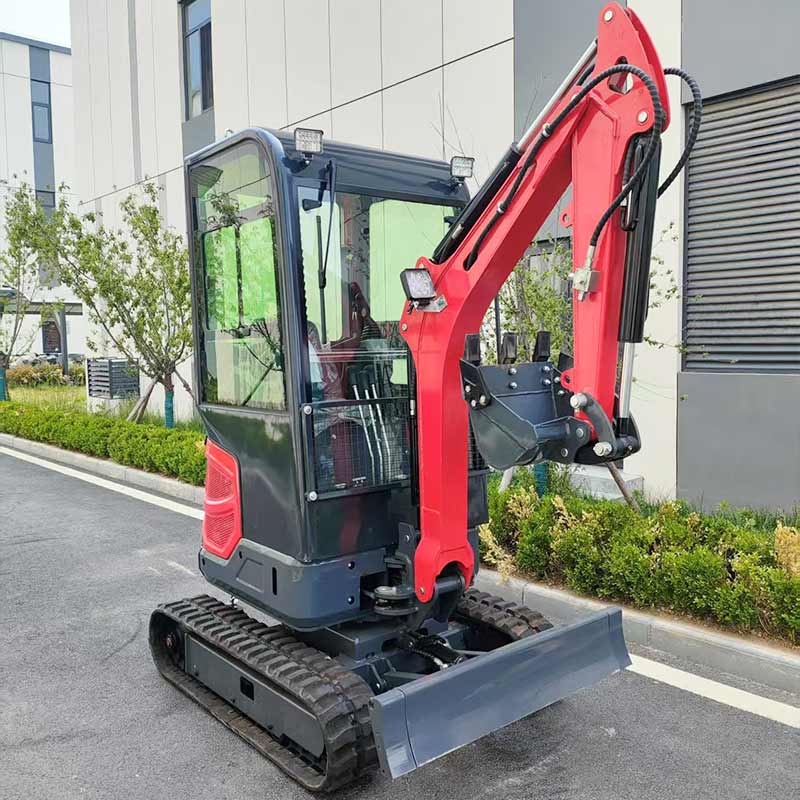
Smart Construction Technology
Telematics systems now monitor fuel consumption, cycle time, and hydraulic load in real time.
Electrification Trend
Electric mini excavators reduce energy loss and improve torque efficiency in urban projects.
Lightweight Structural Engineering
New steel alloy designs reduce machine weight while maintaining strength.
Why Mini Excavator Work Efficiency Matters for ROI
Higher efficiency leads to:
- Lower fuel consumption
- Faster project completion
- Reduced labor dependency
- Increased machine utilization rate
- Higher rental profitability
Conclusion
Mini excavator work efficiency is a multi-dimensional concept involving hydraulics, engine performance, structural design, operator skill, and job-site planning. In modern construction environments, efficiency is directly linked to profitability and project success.
A well-optimized mini excavator delivers exceptional productivity in confined spaces, making it an indispensable machine for landscaping, utility installation, residential construction, and municipal maintenance projects.
By understanding efficiency principles and applying optimization strategies, contractors can significantly reduce operational costs while improving overall project performance.
FAQ
What is the main factor affecting mini excavator efficiency?
Hydraulic system performance is the most critical factor influencing cycle time and productivity.
How much can a mini excavator improve productivity?
Compared to manual labor, productivity can increase by 5–12 times depending on application.
Does operator skill affect efficiency?
Yes, experienced operators can improve efficiency by up to 20%.
Is a mini excavator efficient for large projects?
It is most efficient for precision and confined-space tasks, not bulk earthmoving.
What soil conditions reduce efficiency?
Rocky, frozen, and highly compacted soils significantly reduce performance.
Can attachments improve efficiency?
Yes, attachments can increase task efficiency by 30–70% depending on application.
What is the ideal cycle time?
High-efficiency machines aim for 8–12 seconds per full working cycle.