

Table of Contents
Commercial lawn mower selection becomes clearer when the project question is specific: evaluating a commercial maintenance contract. A commercial mowing package should reflect vegetation and travel between work zones rather than acreage alone. This guide to a commercial lawn mower shows which evidence to collect, how to compare equipment packages and where to request clarification before committing to a machine.
Commercial lawn mower: set a practical boundary for the comparison
A commercial mowing package should reflect vegetation and travel between work zones rather than acreage alone.
This commercial lawn mower assessment focuses on evaluating a commercial maintenance contract. The three items to resolve first are vegetation density, route layout, duty hours. Separate essential requirements from preferences. A supplier should explain a deviation openly so the buyer can assess its effect on work, transport or maintenance.

Understand the equipment and its limits
A remote mower separates the control position from the cutting machine. The cutting system and traction system may use different sources of power. Confirm the complete drive arrangement rather than assuming that a reference to electric motors means the whole machine runs only on a battery.
When evaluating a commercial lawn mower, distinguish the standard product from the final ordered configuration. Measure the complete machine envelope, cutting width and clearance relevant to the intended site. Identify the engine or battery option and the control system supplied with that configuration. Broad range or slope claims should be reconciled with the manual and actual working conditions before being used in a purchase specification.
Compare the commercial lawn mower specification
Use this table as an inquiry worksheet. A blank answer means that information is still needed; it is not evidence that the requirement has been met.
| Decision point | Evidence to request | How to compare |
|---|---|---|
| Vegetation density | A dated record identifying vegetation density for the proposed configuration | Use the same units and operating assumptions for every offer |
| Route layout | Written confirmation covering route layout and any exclusions | Record any difference in scope before comparing the price |
| Duty hours | A drawing, manual entry or demonstration addressing duty hours | Resolve missing or conflicting information before acceptance |
Check vegetation density before accepting a configuration
The first part of evaluating a commercial maintenance contract is establishing vegetation density. Ask the supplier to identify the configuration to which the answer applies, then compare it with your own project information. If the answer only describes a product family, request the model-specific version.
Next, address route layout and duty hours together. These checks should support the same commercial lawn mower decision rather than sit in separate quotations with conflicting assumptions. The limiting factor may be access, supporting equipment or a service arrangement. Resolve it before comparing extra power or nominal output that the site cannot use.
Evaluate commercial lawn mower performance with a relevant demonstration
Use vegetation and a finish requirement representative of the contract. Measure completed area over an entire work interval, including repositioning and interruptions. Verify the documented stop and signal-loss behaviour through an appropriate demonstration. Keep people away from the cutting and thrown-object area under the applicable operating instructions.
For this project, retain evidence of vegetation density, route layout, duty hours with the test record. Judge the result by area completed to the agreed finish. List remaining uncertainties instead of converting one demonstration into a guaranteed output figure.
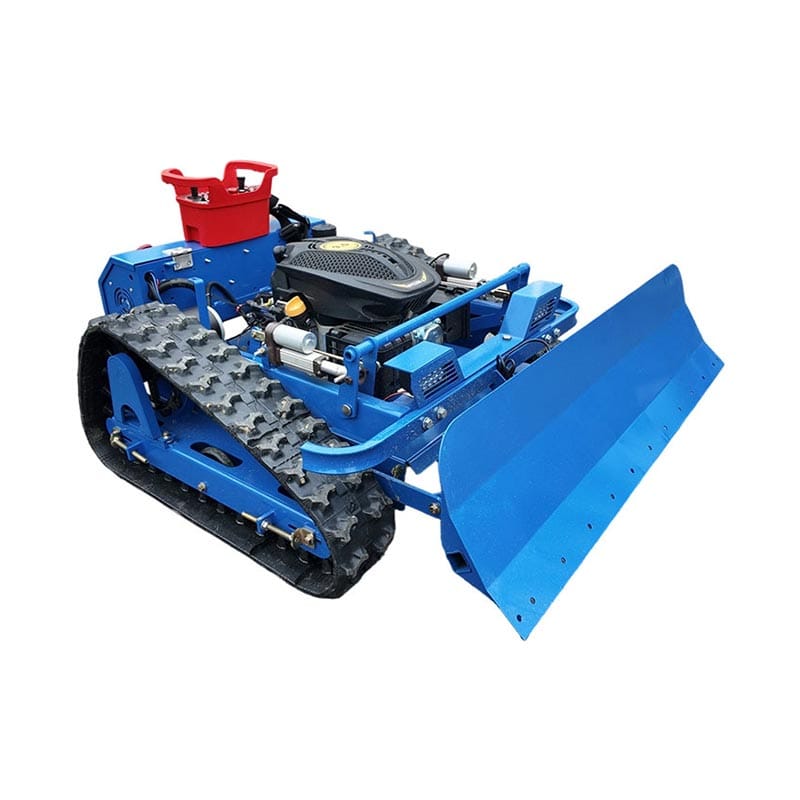
Plan commercial lawn mower service and parts support
Ask for model-specific blade and drive-component references, inspection requirements and maintenance access. Cutting parts must meet the specified dimensions and mounting requirements. Record the controller and receiver identities as well as the engine or battery details, because future support may involve both mechanical and electronic components.
Assign a person to retain the accepted commercial lawn mower configuration, support contacts and replacement-part references. Update the record whenever a component or option changes. This connects the purchase decision to the equipment that the crew actually receives.
Compare commercial lawn mower costs on the same scope
Separate purchase cost from energy, cutting consumables, transport and routine servicing. Compare alternatives over the same vegetation conditions and finish target. For electric or mixed-drive models, include the charging or battery support actually required. A runtime claim without a stated duty cycle is insufficient for staffing a daily contract.
For evaluating a commercial maintenance contract, include the cost consequences of vegetation density and route layout. Keep duty hours explicit in the commercial or technical schedule. Treat an unpriced requirement as an open item rather than assuming it is free.
Confirm project limits and supporting references
Remote operation does not eliminate hazards from blades, debris, slopes or nearby people. An operator needs the visibility and working area required by the manufacturer. Do not interpret a maximum radio range as a recommended operating distance, or an advertised gradient as permission to work on any slope.
For general terminology, see the lawn mower overview. This reference explains the equipment category; the selected machine’s manual and configuration documents determine its operating requirements.
Request a commercial lawn mower configuration review
Explore Wanli’s Lawn Mower range and the 550 Remote Controlled Lawn Mower product page to identify possible configurations. A listed product is a starting point for discussion, not a promise that every option described in this article is available.
Send Wanli your project location, intended work and the information available on vegetation density, route layout, duty hours. Ask for a commercial lawn mower proposal that states the configuration, included equipment, delivery scope and support terms. Use the inquiry form below or contact the equipment team to discuss the remaining requirements.
Frequently asked questions
What information starts a commercial lawn mower inquiry?
Provide vegetation density, route layout, duty hours, together with the project location and work requirement. These details help distinguish a suitable configuration from a generic product recommendation.
Does remote control make the mower autonomous?
No. Remote control and autonomous navigation are different capabilities. Confirm the actual controls and retain the operator supervision required by the manufacturer.
How should I compare commercial lawn mower offers?
Use the same requirements for vegetation density and route layout. Record differences in duty hours, included accessories, support and delivery before comparing total prices.
When evaluating a commercial lawn mower, can a demonstration replace documents?
No. A demonstration is useful when its configuration and conditions are recorded. Keep the applicable manual, specifications and written answers on vegetation density as well.
What details matter in a quote for a commercial lawn mower?
Confirm the exact configuration, scope, support terms and unresolved points related to evaluating a commercial maintenance contract. Obtain written confirmation of options rather than assuming every catalogue variant is included.